

Analogue Corners
Pulling up a chair for Rebecca Makkai...


I’m so excited to pull up the chair today for author, Rebecca Makkai. Rebecca has written multiple novels including The Great Believers (one of my favorites of all time) and I Have Some Questions for You. To say she is brilliant — and extremely observant about the particular habits of the world we’re living in — is an understatement.
In this newsletter, Rebecca writes about something that feels incredibly familiar: how hard it has become to simply be… bored. Even the smallest moments (folding laundry, sitting in a waiting room, walking the dog) seem to come with a podcast, a scroll, something filling the silence.
I recognize this instinct in myself every day. I read so much for work that when I do have a quiet moment, I often feel like I should be reading something — catching up, being productive. Even on the treadmill, at 6am, I’m answering emails, finishing a book, or doing research for the show. When I walk in nature in the evenings, music or a book fills my AirPods. I’m missing the sound of the wind in the trees or the doves overhead.
Rebecca’s essay is a gentle reminder that quiet spaces matter too. Her solution is both oddly wonderful and quite simple: let’s all create a sacred room where it’s always approximately 1948. A room where phones aren’t allowed (it is the 40’s — they haven’t been invented!), music plays on a record player, and conversation lingers.
I loved this idea so much and hope you do, too. Let this be a reminder for us all to take a step away and just let our minds wander…
Here’s Rebecca:
I’ve been thinking lately about ways to be deliberately analogue. Ways to put down the computer and phone and leave emails unseen, ways to be quiet and slow and understimulated. I think most of us have this goal, or at least this ideal, but then we find ourselves unable to fold laundry without a podcast, unable to sit in a waiting room for five minutes without watching videos or getting angry at people online.
I don’t want to become Amish, and my life will never allow me to live screen-free, and I believe it’s an essential responsibility to stay informed on the world and engaged in the news. But here’s what I keep dreaming of: A room in my house where it’s always approximately 1948.
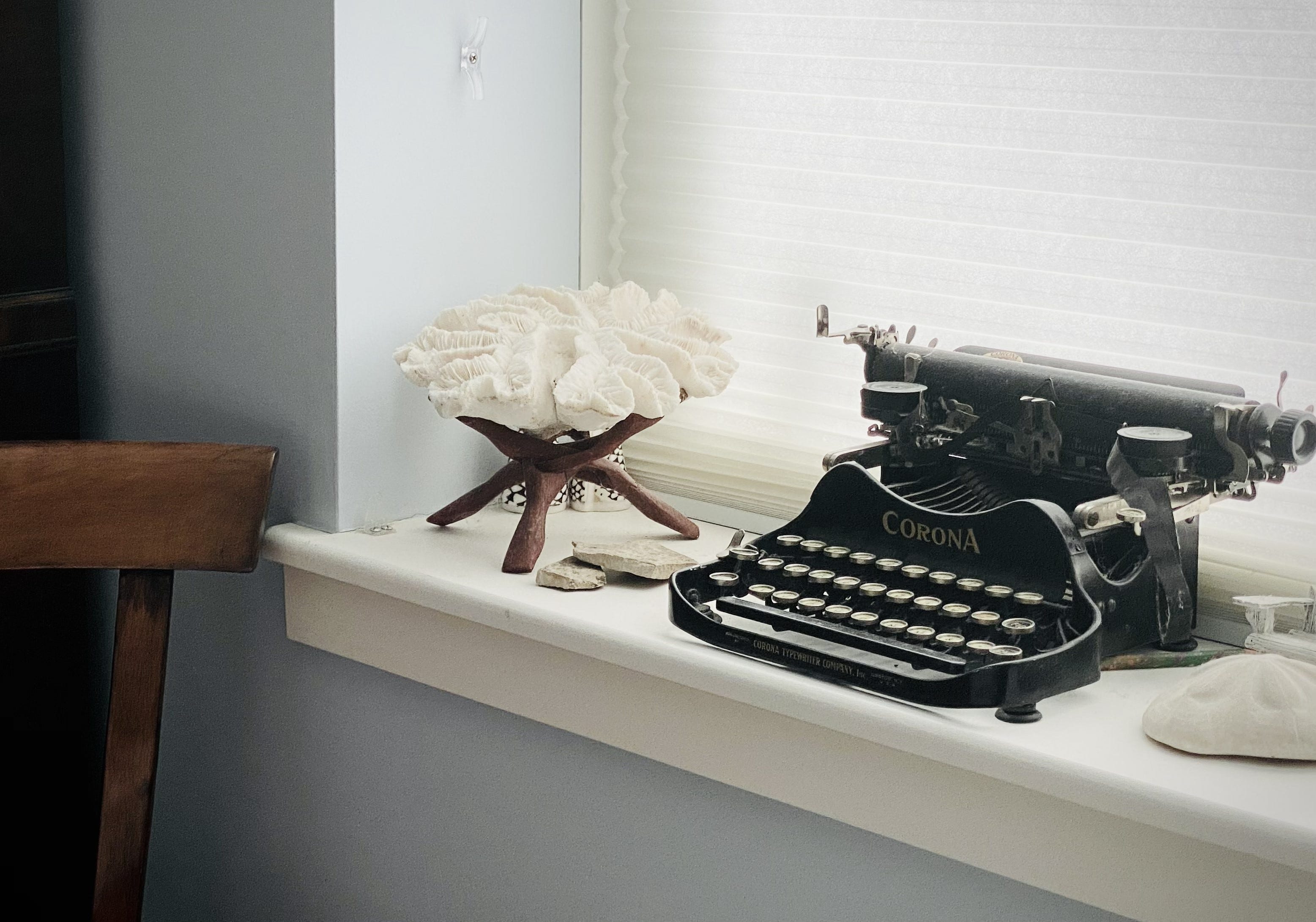
What I mean: At the point in my life when I can finally live in a house with a closed-off living room or den (right now my kitchen, dining room, and living room are all one thing), I want to make that room a sanctuary. In that room, there will be books, a record player with old music only, stationery for letter-writing, a typewriter, a bar cart for making martinis. When you enter this room, you must drop your phone in a basket outside the door.
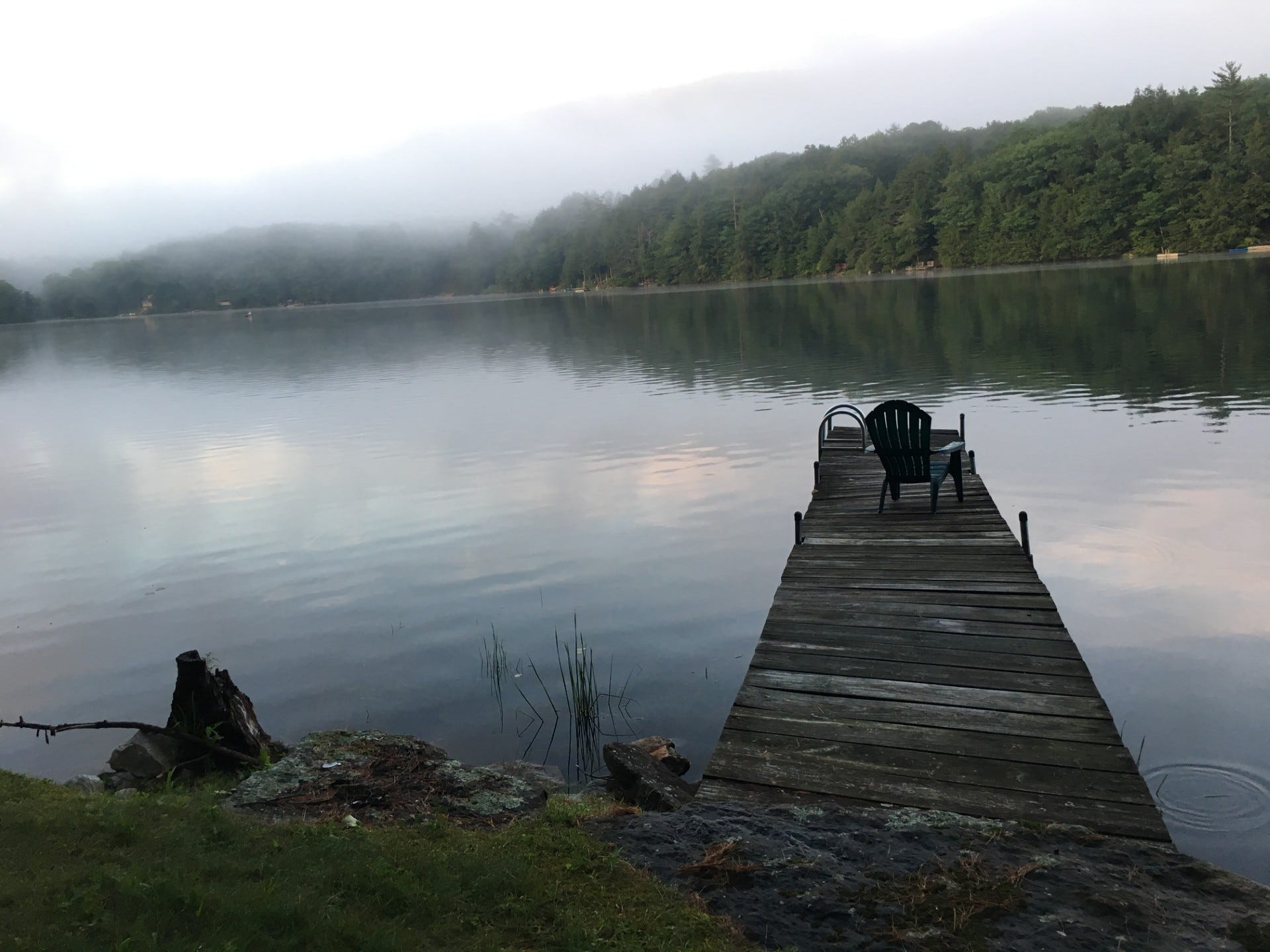
I of course don’t want to pretend, in this room, that Gandhi has just been assassinated and women can’t hold credit cards and Jim Crow laws are strangling the country and there’s no vaccine for polio. I want a fictional, idealized, vaguely-defined past, one characterized more by the distractions it lacks than by its own details. It’s very dangerous when we let ourselves believe that the real past was perfect, or let politicians tell us we’ve lost some magical past glory; but in a contained space, with intention, I think we can curate a past that’s an escape and a mental reset.
When you’re in this room with others, you’re not allowed to talk about the modern day. You can talk about today’s weather, perhaps, but not the news or your stress or the dog meme you saw that morning. What’s left? Everything. Your thoughts on pillows, how you feel about insects, what your dream garden would look like, whether real time travel is possible.
Your heart rate slows in this room. You will not have an Apple watch on to confirm this, but you’ll know.
I also wish someone would build a boutique hotel like this. Perhaps one where each guest room is a different year—1921, 1960, 1883—and the lobby is from some undefined past. Or maybe it’s one that redecorates for a new era every six months. (“Reserve your room now for 1928! You won’t believe our new speakeasy!”) You get a real key for your door, you can wear period clothing if it suits you, you can pretend to be your own great-grandmother. You surrender your phone when you check in. They’ll loan you a plain old wristwatch.
Meanwhile, until either of these dreams comes true, I’m doing my best to find quiet in small ways. Sometimes that looks like turning off the wifi (but still using the computer, as I’m doing right now). Sometimes it looks like putting down my phone (but still using my watch for alerts). Sometimes it looks like taking a walk with my dog, who has no idea what year it is. My efforts are imperfect, incomplete—but I’m making a small dent in the chaos. I’ll eventually end up using the internet to buy a phonograph for that room. But it’ll be the most beautiful old thing, and you’re all invited over for martinis and dancing.
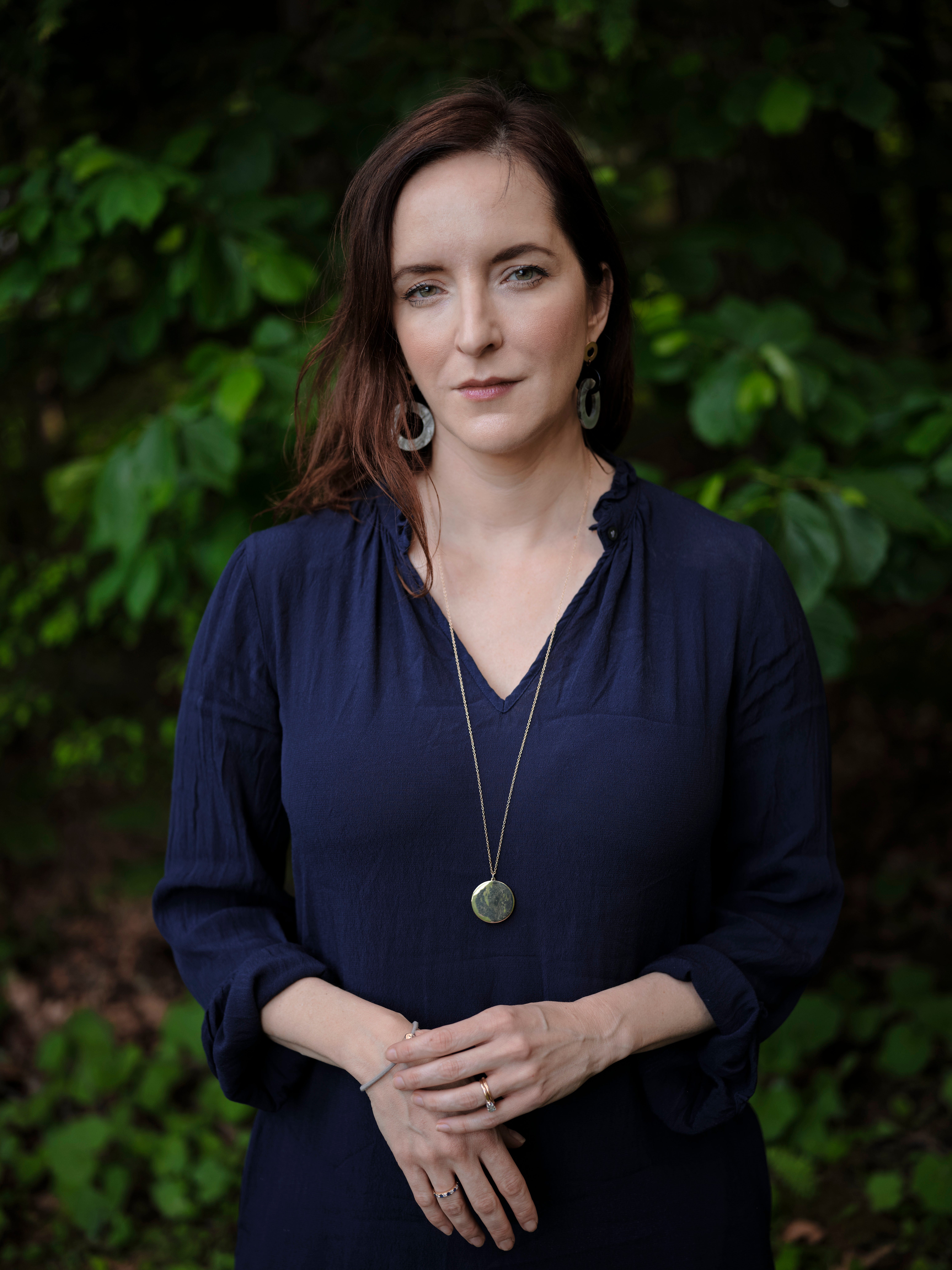
Rebecca Makkai is the author of the New York Times bestselling I Have Some Questions For You as well as four other works of fiction. Her last novel, The Great Believers, one of the New York Times’ Best Books of the 21st Century, was a finalist for both the 2019 Pulitzer Prize and the 2018 National Book Award, and was the winner of the ALA Carnegie Medal and the LA Times Book Prize among other honors. A 2022 Guggenheim Fellow, Rebecca teaches graduate fiction writing at Middlebury College, Northwestern University, and the Bennington Writing Seminars, and she is Artistic Director of StoryStudio Chicago.
 | A guest post by
|
Perhaps we will see a shift? I didn’t think cell phones would ever be pried out of student’s hands at schools and we are seeing that pendulum swing back. Fun fact - phones were invented in 1876. They were in many homes by the 1920’s….
I purposely walk by dog without my phone nor earbuds. I talk to my dog and other people/dogs and observe my environment. It’s great to be offline twice a day.